
We’re sharing some engagement strategies for growing your church membership, whether you’re a staff of one or 20! With the right strategies, software, and clarity, you can build connections with guests and members alike to grow your church for the sake of the Gospel.
Make Connections
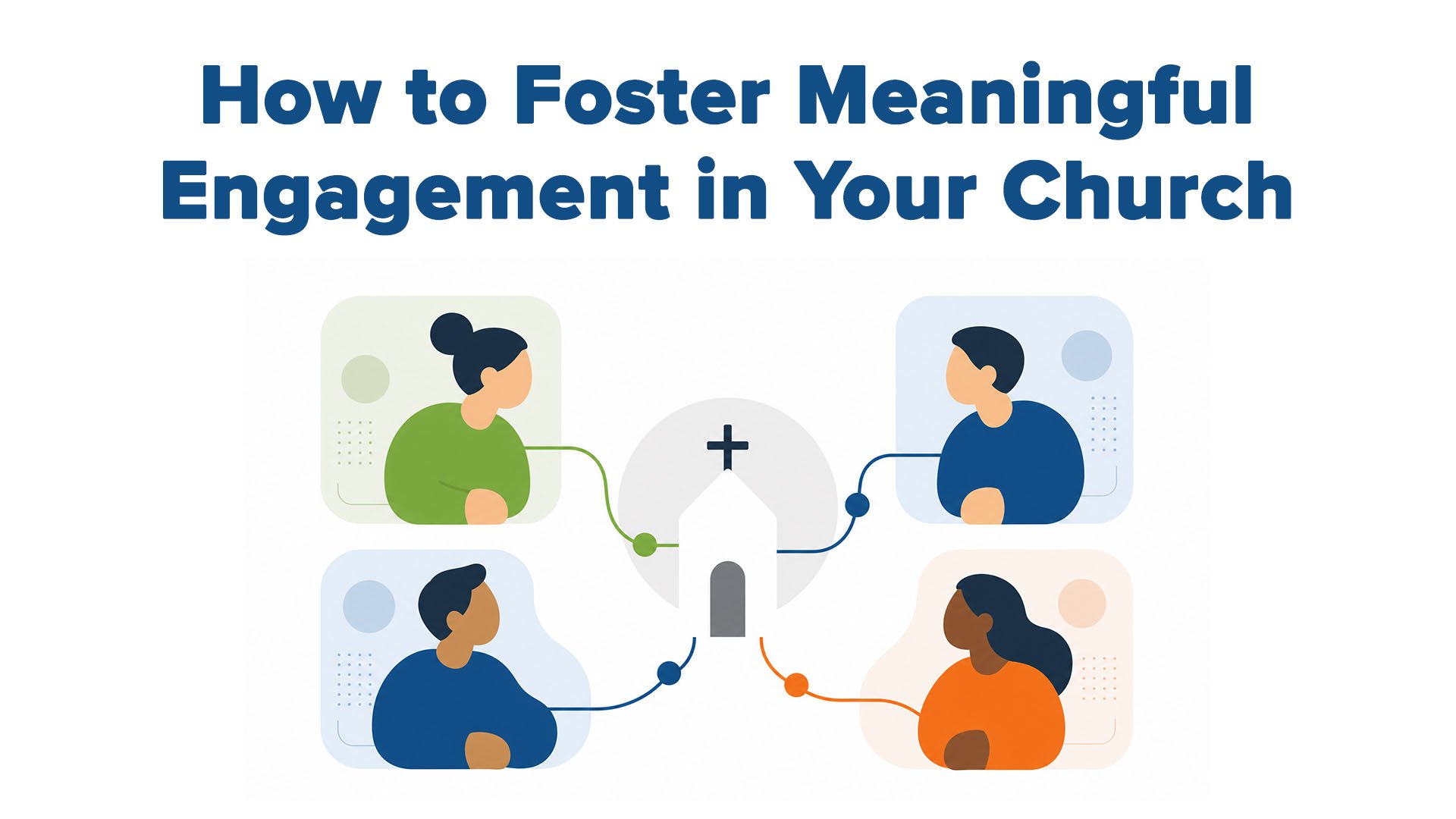
It’s important for your pastor and members to make individual connections with first-time visitors and returning guests, but it’s also important to connect them to relevant groups within your church. Forming these lasting connections is key to building engagement.
Individual Connections
Both your pastors and members should be making individual connections with guests who visit your church. It’s often said that the deciding factor for whether visitors come back to a church is if people connected with them outside of a simple “good morning.”
Forming these individual connections is paramount to engaging both your longtime members and new guests. Invite them to join you after worship for coffee in your fellowship hall, for Bible study, or for lunch.
Next Step
Another key engagement strategy for growing your church membership is to have a clear next step for those who are interested in learning more about your church. You might even have multiple next steps at different stages.
For example, your first next step might be to fill out a connect card, which includes their contact information so your pastor or staff can reach out to them. If they fill out a connect card and then visit your church four more times, you might consider having them sign up for a small group Bible study. If they regularly attend small group, then you could invite them to take your membership class to formally become a member of your church.
Your church might already be doing these things, but formalizing them and having an actual engagement strategy can do wonders for growing your church membership!
Get Involved at Church
Another key way to engage both your members and visitors is to get them involved in the life of your church. Hopefully by now they’ve made some meaningful connections with other people in your congregation and taken some steps to further those connections. But you can take things a step further and encourage them to get more involved at church—without burning them out!
Volunteer
Volunteering to serve at church is a wonderful way to use your talents to serve God’s kingdom here on earth—and it’s also a great way to get your congregation involved in your mission and ministry. However, it’s important to connect individuals with the right volunteer position or team.
For example, you wouldn’t ask someone who has never used Facebook to run your social media accounts. Ask every potential volunteer what they’re interested in, what their talents are, and how they’re open to serving to find the best fit for them—whether that’s greeting new visitors, folding bulletins, or making tasty snacks!
You can log each member’s interests in your church management software to ensure you’re always connecting them with the right opportunity they are uniquely fit to serve in.
Events
Outside of volunteering, you might encourage your people to get involved in events that are relevant to them as well—whether that’s inviting middle schoolers and high schoolers to your youth group, inviting young moms to your weekday children’s ministry, or letting seniors know about your over-50 lunch group.
Again, using the data you have in your church membership software, you can easily connect each individual with what’s relevant for him or her. By ensuring you have logged his or her age, interests, children, spouse, and more, you can build meaningful connections for engagement.
Improve Your Digital Presence
Lastly, but perhaps most importantly, is your digital presence—which is often the first impression people have of your church. You don’t need to be an expert in social media or websites to make small, meaningful improvements that can go a long way.
Social Media
Your social media presence is important, but it doesn’t have to take hours of your time each week! We recommend posting once a week to let people know your account is active—whether you’re posting a sermon clip or an image about an upcoming event. We also recommend pinning a post to your Instagram profile with your service times so people can easily see when to visit you.
Even if your church doesn’t have a graphic designer, you can still make effective church graphics for social media. If you don’t have experience in social media or graphic design, Canva is a great resource. The website offers hundreds of free social media templates and a free premium plan for nonprofits. It’s worth it to sign up for the nonprofit account to gain access to hundreds more templates. You can also check out our previous blog post on how to design church social media graphics.
Website
Your website is perhaps one of the most important parts of your digital presence; it’s the first encounter many people have with your church when they’re searching for a new church home online. You don’t need to have a complicated website, but you do need to have a user-friendly website that shows all necessary information. Here are a few quick tips to make your website effective:
- Use real images of your church, not stock images.
- Prominently feature your address and service times on the home page.
- The main pages you need are Home, About Us, and Contact.
- Limit yourself to two fonts and a handful of colors across all pages.
Remember this: A simple but clear website is better than a busy website with 20 pages. A church builder like Church360° Unite can help you build a simple but effective site that will stand the test of time and be simple to maintain—even if you’re not a web developer.
Emails
Lastly, you can engage members and visitors with the right email marketing strategy! By sending short, informative emails a few days apart, you can stay top of mind and also give your guests a clear next step to take.
We recommend creating a welcome email series to follow up with church visitors. These emails should inform your guests about your church’s mission, beliefs, and values. Pro tip: Space out the emails so they are automatically sent every five to seven days; you don’t want to overwhelm your new subscribers.
Put these engagement strategies into action with Church360° Members. Track connections, organize member information, and create meaningful follow-up processes that help your congregation grow. Start your free trial today.